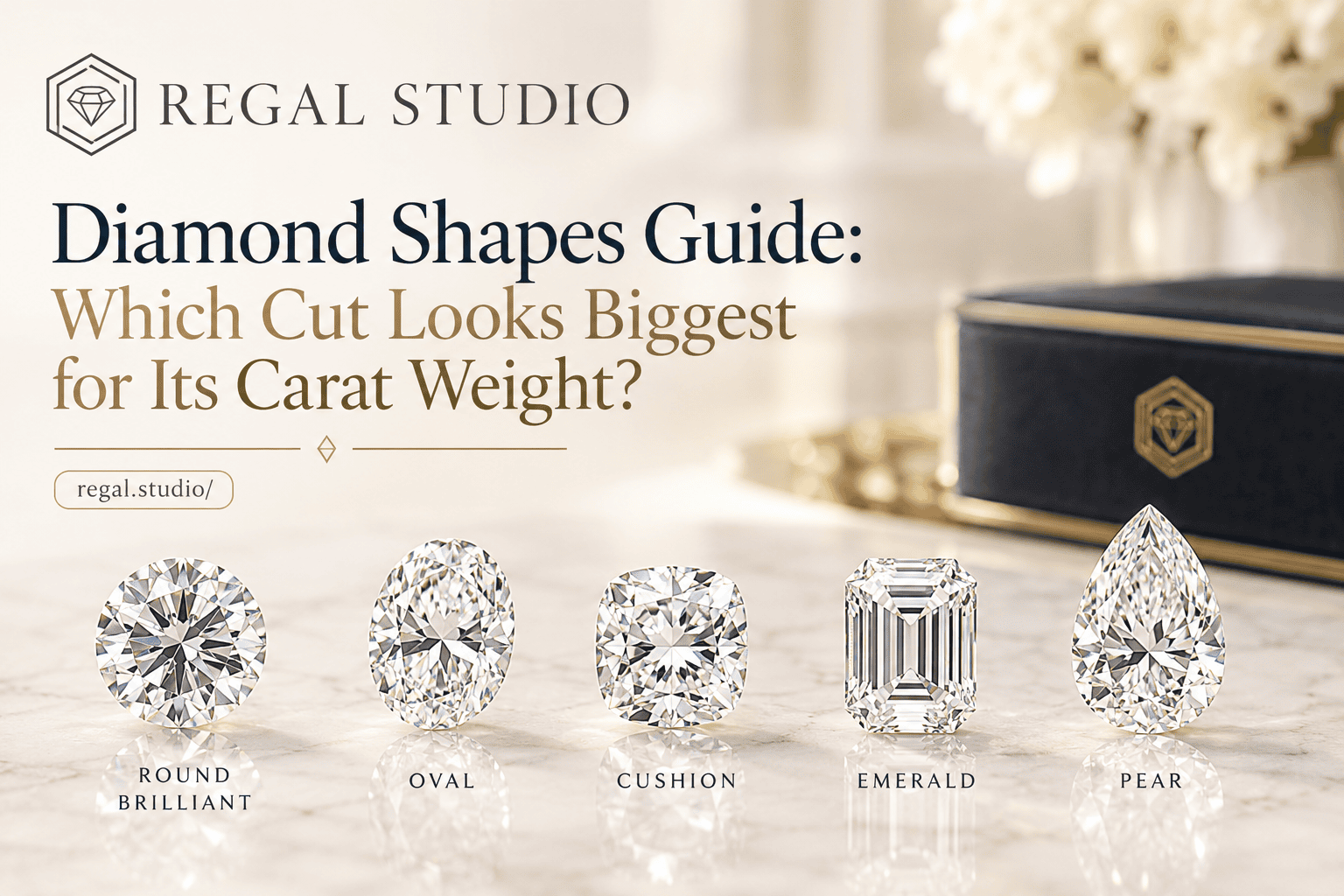


Diamond Shapes Guide: Which Cut Looks Biggest for Its Carat Weight?
Quick answer: For maximum size per carat, elongated shapes win. Marquise looks the largest face-up, followed closely by pear and oval, each appearing up to 10 to 15% bigger than a round of the same carat weight. Round brilliant actually looks the smallest per carat, because its ideal cut hides weight in depth. If you want the most visual size for your budget, choose an elongated shape; if you want maximum sparkle, choose round.
So here is the complete diamond shapes guide, ranked by which looks biggest, from an Atlanta master jeweler.
A Note on Where This Guidance Comes From
This guide comes from Regal Studio in Buckhead, Atlanta. Our founder, Mack, began at the jeweler’s bench at just fourteen, trained across Europe, and is today a GIA-certified diamond grader with over 45 years of experience.
For twenty years on Peachtree Road, we have helped clients choose the shape that gives them the most ring for their budget.
So this is not a generic list. It is how a master jeweler thinks about size, shape, and value.
Why Carat Weight Isn’t the Same as Size
Here is the insight that changes how you shop. Carat is weight, not size.
Two diamonds can both weigh exactly 1 carat yet look dramatically different in size on the finger. Where the weight sits, in a deep stone or spread across a wide surface, determines how big it looks.
A key insight often overlooked: what the eye registers is the face-up surface area, the part you see from above. A shape that spreads its weight into a larger face-up area looks bigger, even at the same carat.
This is why shape is one of the most powerful levers for maximizing visual size.
The Size Ranking: Biggest to Smallest Face-Up
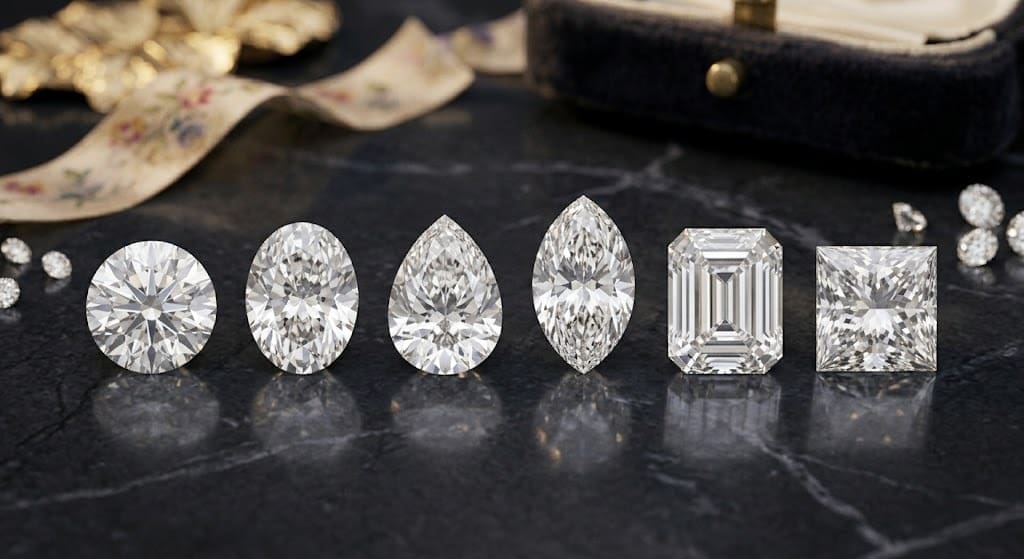
Let us answer the core question directly, with the shapes ranked by their apparent size per carat.
Diamond Shapes Ranked by Face-Up Size (Same Carat)
Rank | Shape | Why It Looks This Size |
1 | Marquise | Longest, largest face-up area of any cut |
2 | Pear | Nearly as large, dramatic elongation |
3 | Oval | ~10% larger than round, elongates the finger |
4 | Emerald | Elongated step cut, broad spread |
5 | Radiant | Good size, cropped corners |
6 | Princess | Compact square, moderate face-up |
7 | Cushion | Compact, weight carried in depth |
8 | Round | Smallest per carat, depth hides weight |
A key insight often overlooked: the difference is real and measurable. At 1 carat, a marquise can stretch to about 10.5mm long, versus a round’s roughly 6.4mm, over 60% longer in its dominant dimension.
Why Elongated Shapes Look Bigger
Three mechanisms explain why marquise, pear, and oval win the size game. Understanding them helps you choose.
- Length-to-width ratio. Elongated shapes stretch the stone, maximizing one dimension.
- The eye tracks the long axis. We estimate size from the longest line, so a longer stone reads as larger.
- Finger coverage. Elongated cuts physically cover more of the finger, amplifying perceived size.
Experience has shown that an elongated shape is the single most effective way to get a “bigger” look without paying for more carats. It is the value shopper’s secret.
Why Round Looks the Smallest (and Why People Still Choose It)
This surprises many buyers. The most popular shape is also the smallest-looking per carat.
A round brilliant is cut for maximum sparkle, which demands significant depth. That depth hides weight below the surface, where you cannot see it, so less of the carat shows face-up.
So why is round still the best-seller? Because it delivers unmatched brilliance and fire. Its symmetrical, 58-facet cut returns more light than any other shape.
A key insight often overlooked: choosing round means choosing sparkle over size. There is nothing wrong with it, you are simply prioritizing light performance. If size is your goal, look elsewhere.
Shape-by-Shape: The Full Guide
Here is a quick character sketch of each popular shape, beyond just size.
Round Brilliant
The classic. Maximum sparkle and fire, timeless, and the most forgiving of all shapes. Commands a price premium and looks smallest per carat, but no shape sparkles more.
Oval
The 2026 favorite. Brilliant sparkle like a round, but elongated to look larger and flatter the finger. Watch for the bow-tie shadow in poorly cut stones.
Marquise
The size champion. Its pointed, elongated shape maximizes face-up area and dramatically lengthens the finger. The pointed tips need a protective setting.
Pear
A teardrop blend of round and marquise. Elegant, elongating, and large-looking, with a single point to protect.
Emerald
A step-cut stone prized for elegant, “hall of mirrors” flashes rather than sparkle. Its open table shows clarity, so choose an eye-clean stone.
Cushion
Soft, pillowy, and romantic, with rounded corners. Carries more weight in its depth, so it looks slightly smaller face-up.
Princess
A modern square with sharp corners and strong sparkle. Good value versus round, with a compact face-up footprint.
Radiant
A hybrid with cropped corners and brilliant faceting. Sparkly, durable, and larger-looking than a princess.
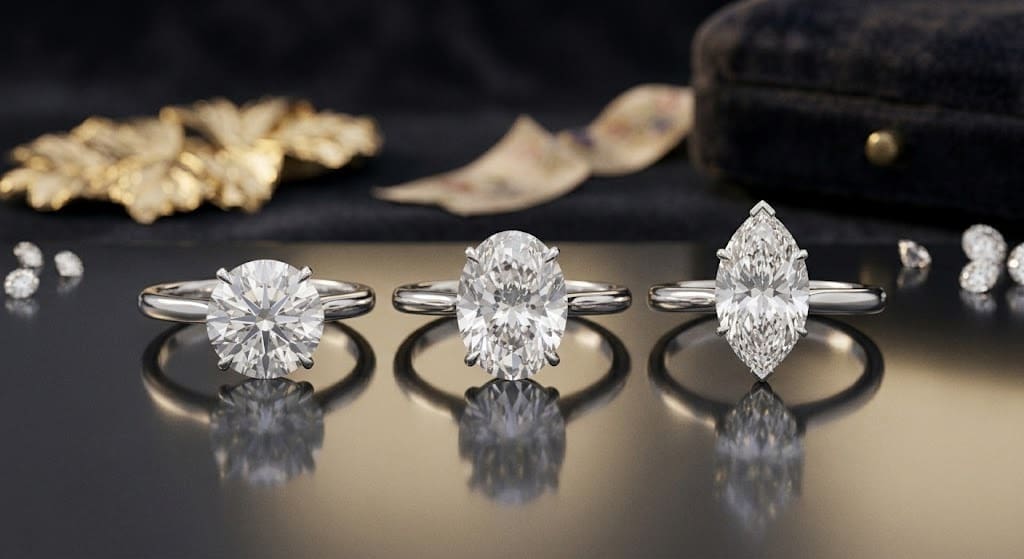
How to Maximize Visual Size (Beyond Shape)
Shape is the biggest lever, but a few other moves make any stone look larger.
- Choose a halo setting. A ring of small diamonds around the center dramatically increases apparent size.
- Use a thin or pavé band. A slimmer band makes the center stone look proportionally bigger.
- Favor a higher length-to-width ratio. Within elongated shapes, a longer stone reads larger.
- Prioritize an excellent cut. A well-cut stone reflects light to its edges, looking fuller.
- Consider “magic weights.” A 0.90ct can look nearly identical to a 1.00ct for noticeably less.
As a GIA Certified Diamond Grader, Mack helps you balance shape, cut, and setting to get the biggest, most beautiful look your budget allows.
Frequently Asked Questions
Which diamond shape looks biggest for its carat weight?
Marquise looks the largest face-up, followed closely by pear and oval. These elongated shapes spread their weight across a wider surface and stretch along the finger, appearing up to 10 to 15% larger than a round of the same carat weight.
Why does a round diamond look smaller than other shapes?
Because it’s ideal cut for maximum sparkle requires significant depth, which hides weight below the surface where you cannot see it. Less of the carat shows face-up, so a round looks the smallest per carat of the popular shapes.
Do elongated diamonds really look larger?
Yes. Shapes like marquise, pear, and oval maximize their length, and because the eye estimates size from the longest dimension, and they cover more of the finger, they read as noticeably larger than a round of equal weight.
What is the best diamond shape for maximizing size on a budget?
An elongated shape, especially oval, pear, or marquise, gives the most visual size per carat. Pairing one with a halo setting and a thin band maximizes the look. Lab-grown versions stretch the budget even further.
Does a bigger-looking shape mean lower quality?
No. Face-up size is about how weight is distributed, not quality. An elongated shape simply spreads its carat differently. You still judge quality by cut, color, and clarity, and a well-cut elongated stone can be both large-looking and beautiful.
Find the Perfect Shape for Your Ring in Atlanta
The right shape depends on what you value most, maximum size, maximum sparkle, or a distinctive look. The best way to decide is to see shapes side by side with an expert who can show you the real differences.
At Regal Studio in Buckhead, every stone is hand-selected by Mack, a GIA Certified Diamond Grader with over 45 years of experience and the trust of more than 400 five-star clients. We help you compare shapes, maximize your budget, and design a ring that looks as big and beautiful as possible, with complete transparency.
Our motto says it all: “You Dream It, We Make It.”
Visit Regal Studio on Peachtree Road in Buckhead, or get in touch to book your consultation. Let a seasoned master jeweler help you choose the perfect diamond shape.
Read More:
Salt and Pepper Diamonds: Are They Worth It for an Engagement Ring?
Oval Engagement Rings: What to Know About Bow Tie, Ratio, and Setting
Sources:
- The6C — Which Diamond Shape Looks Biggest? Size Comparison Guide (2026)
- Ben Garelick — Diamond Shapes Compared: Expert Guide to Every Shape (2026)