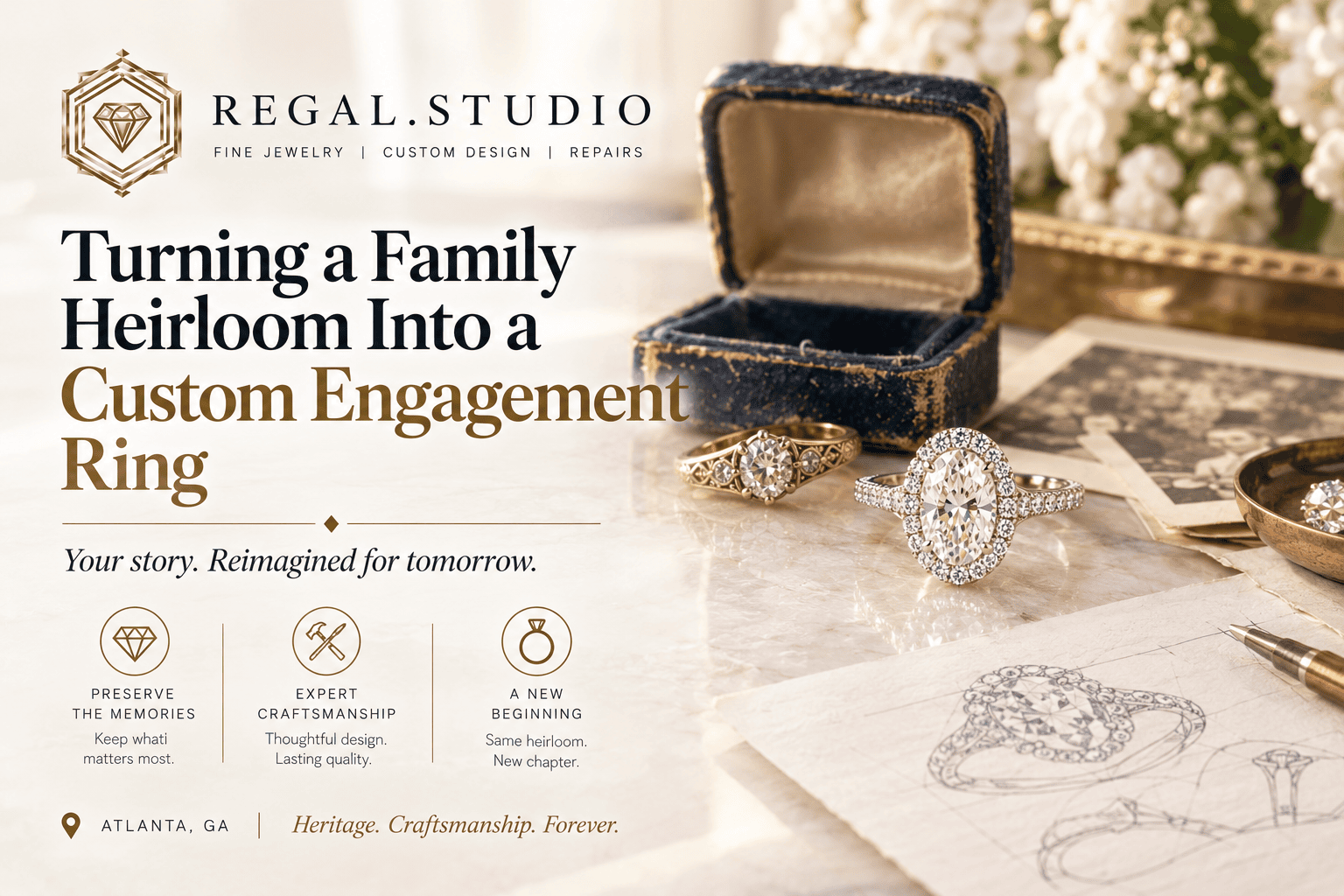


Turning a Family Heirloom Into a Custom Engagement Ring
Quick answer: Turning a family heirloom into a custom engagement ring means resetting an inherited diamond or gemstone, and often reusing the original metal, into a new design you will actually wear. The process starts with an appraisal and careful stone inspection, then moves through design, 3D rendering, and hand-setting, typically over 3 to 6 weeks. Done right, it preserves the sentiment and history of the original piece while creating something modern, durable, and uniquely yours.
So here is exactly how to transform a treasured heirloom into your dream engagement ring, from an Atlanta master jeweler.
A Note on Where This Guidance Comes From
This guide comes from Regal Studio in Buckhead, Atlanta. Our founder, Mack, began at the jeweler’s bench at just fourteen, trained across Europe, and is today a GIA Certified Diamond Grader with over 45 years of experience.
For twenty years on Peachtree Road, we have transformed inherited rings, brooches, and loose stones into engagement rings families now treasure across generations.
So this is not a generic overview. It is the real transformation process, handled with the care an heirloom deserves.
Why Redesign a Family Heirloom?
Many beautiful heirlooms live in a drawer, too sentimental to wear, too dated to enjoy. Redesigning changes that.
Turning an heirloom into a custom engagement ring accomplishes three things at once:
- Preserves the sentiment. The family legacy lives on in a piece worn every day.
- Modernizes the style. An outdated or fragile setting becomes something current and secure.
- Honors more than one story. Stones from different relatives can even be combined into a single ring.
A key insight often overlooked: resetting an heirloom is often more meaningful and more sustainable than buying new. You are reusing a stone with history, not sourcing a fresh one.
Step One: Get a Professional Appraisal First
This is the single most important step, and the one people most often skip. Never begin without it.
Before any work, have the piece appraised and the stone inspected by a certified expert. According to the GIA, you should always establish a piece’s historical or monetary value before altering it.
This appraisal tells you two crucial things:
- The exact grade, size, and condition of your diamond.
- Whether the piece has collectible or historical value that redesigning would diminish.
A key insight often overlooked: occasionally an antique piece is worth more left intact than reset. A reputable jeweler will tell you this honestly, even if it means less work for them.
Step Two: The Careful Deconstruction
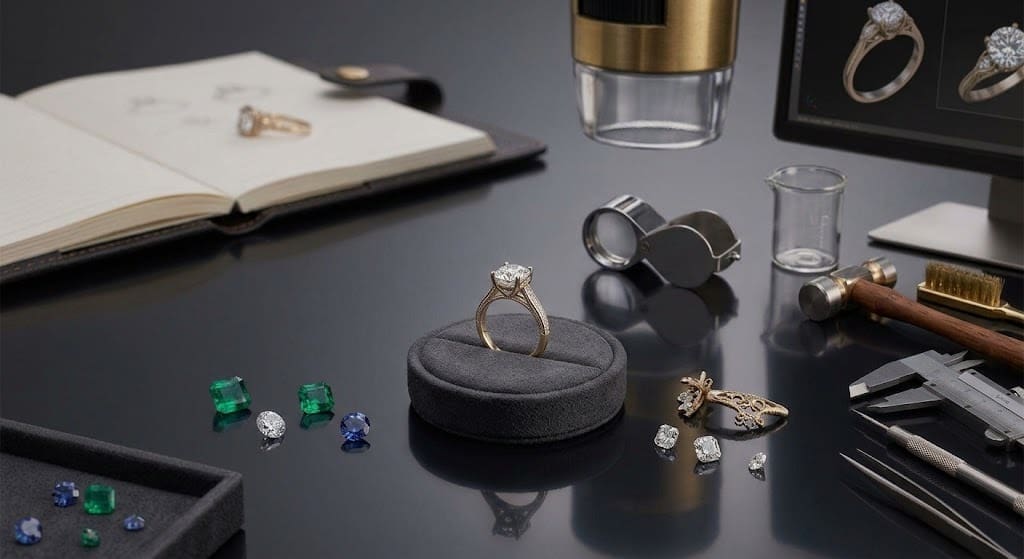
Once you decide to proceed, the original piece is taken apart with real care. This is delicate work.
A master jeweler gently removes the center stone and inspects it under magnification for chips, cracks, or abrasions, any weakness that could affect resetting.
The original metal is assessed too. Is it 14k gold, 18k gold, or platinum? Depending on its condition, it may be melted down and reused in the new ring.
Experience has shown that nothing of value, material or emotional, should be lost in this step. Every component is preserved and evaluated before anything moves forward.
Step Three: Decide What to Keep and What to Change
This is the heart of the emotional decision. Some elements carry meaning; others are simply dated.
Think carefully about what matters most to you:
- The center stone almost always stays. It is the soul of the heirloom.
- Original engravings, dates, or initials can often be preserved or transferred.
- The old setting is usually what gets updated, since worn vintage prongs are a safety risk.
- The original metal can be reused, hidden inside the new band, for a subtle sentimental touch.
A key insight often overlooked: you do not have to keep everything to honor the piece. Preserving the meaningful elements while updating the rest is often the most loving choice.
Step Four: Recut or Preserve the Stone?
Here is a decision unique to heirloom work, and it deserves real thought.
Older diamonds are often Old European or Old Mine cuts, shaped for candlelight, not modern brilliance. You have two paths.
Recut Comparison
Option | Pros | Cons |
Recut | Maximizes sparkle, modernizes proportions | Slightly reduces carat weight |
Preserve | Keeps original character and full weight | Softer, more vintage sparkle |
In our market observations, many families choose to preserve an old cut precisely because that antique character is part of the heirloom’s charm. There is no wrong answer, only what feels right to you.
Step Five: Design the New Ring
Now the creative part begins. The heirloom stone becomes the centerpiece of a design built around you.
You choose a setting that fits your style and protects the stone:
- Solitaire. Puts all the focus on the heirloom stone, timeless and clean.
- Halo. Surrounds the stone with sparkle and makes it appear larger.
- Three-stone. Beautifully symbolic, and a natural fit if you have multiple family stones.
- Vintage-inspired. Honors the era the stone came from.
As a GIA Certified Diamond Grader, Mack helps you choose a design that flatters your specific stone’s cut, color, and size.
Step Six: See It in 3D Before It’s Made
This step protects your heirloom and your peace of mind. Nothing is permanent until you approve it.
We create detailed 3D CAD renderings, and often a wax model you can try on, so you see exactly how your heirloom will look in its new life before a single change is made.
A key insight often overlooked: with an irreplaceable stone, this preview stage is essential. You should never approve resetting a family diamond based on a verbal description alone.
Step Seven: Expert Setting and Finishing
Finally, the transformation is completed at the bench by hand. This is where security matters most.
The new metal is cast, and your heirloom stone is hand-set. A master jeweler sets the stone level, with prongs angled securely, so a diamond that has survived generations is protected for generations more.
For most heirloom conversions, plan on 3 to 6 weeks from consultation to finished ring, longer for complex designs.

A Few Honest Tips for Heirloom Conversions
From decades of handling irreplaceable pieces, here is our straight advice.
- Work only with a reputable, in-house jeweler. Your heirloom should never be shipped to an anonymous contractor.
- Insist on an appraisal first. Always know what you have before you change it.
- Ask for CAD renderings and a wax model. See it before you commit.
- Consider the stone’s condition. Some older diamonds need gentle handling; a specialist plans for this.
- Preserve what carries meaning. Engravings and original metal can live on inside the new piece.
Why Atlanta Trusts Regal Studio for Heirloom Redesign
When people bring us a family heirloom, they are handing over something irreplaceable. They want a craftsman who understands both its history and its meaning.
That is exactly what we offer. Every heirloom conversion is handled in-house, by hand, with the care of an archivist and the skill of a master.
Twenty years on Peachtree Road and more than 400 five-star reviews have made Regal Studio one of Atlanta’s most trusted names in fine jewelry. Your heirloom never leaves our care.
Frequently Asked Questions
Can I turn my grandmother’s ring into an engagement ring?
Yes. This is one of the most meaningful custom projects we do. The process resets the heirloom stone, and often reuses the original metal, into a new engagement ring design, preserving the sentiment while modernizing the style and securing the stone.
Should I get my heirloom appraised before resetting it?
Absolutely. Always appraise and inspect the piece first. This confirms the stone’s grade and condition and reveals whether the piece has historical or collectible value that redesigning would reduce. Never alter an heirloom before you know what you have.
Can the original metal be reused in the new ring?
Often, yes, depending on its condition and any past repairs. Original gold or platinum can sometimes be melted and incorporated into the new band, frequently hidden inside against the skin, adding another layer of sentimental value.
Will resetting reduce my diamond’s carat weight?
Only if you choose to recut it. Simply moving the stone into a new setting does not reduce its weight. Recutting to modernize an old cut can enhance brilliance but slightly reduces carat weight, so it is your choice.
How long does it take to turn an heirloom into an engagement ring?
Typically 3 to 6 weeks from consultation to finished ring, depending on the design’s complexity. The process includes appraisal, deconstruction, design, 3D rendering approval, and hand-setting.
Give Your Family Heirloom New Life in Atlanta
A family heirloom carries stories no new ring ever could. Transforming it into an engagement ring you wear every day keeps those stories alive, worn close, for the next generation to inherit.
At Regal Studio in Buckhead, every heirloom conversion is handled in-house by Mack, a GIA Certified Diamond Grader with over 45 years of experience and the trust of more than 278 five-star clients. We honor the history of your piece while designing something modern, secure, and entirely yours, with a free consultation and appraisal to start.
Our motto says it all: “You Dream It, We Make It.”
Visit Regal Studio on Peachtree Road in Buckhead, or get in touch to book your consultation. Let a seasoned master jeweler turn your family heirloom into a ring you will treasure forever.
Read More:
Are Pink Diamonds a Good Investment in 2026?
Choosing a Center Stone for Your Custom Engagement Ring