


The Regent Diamond: History’s Most Politically Charged Gem
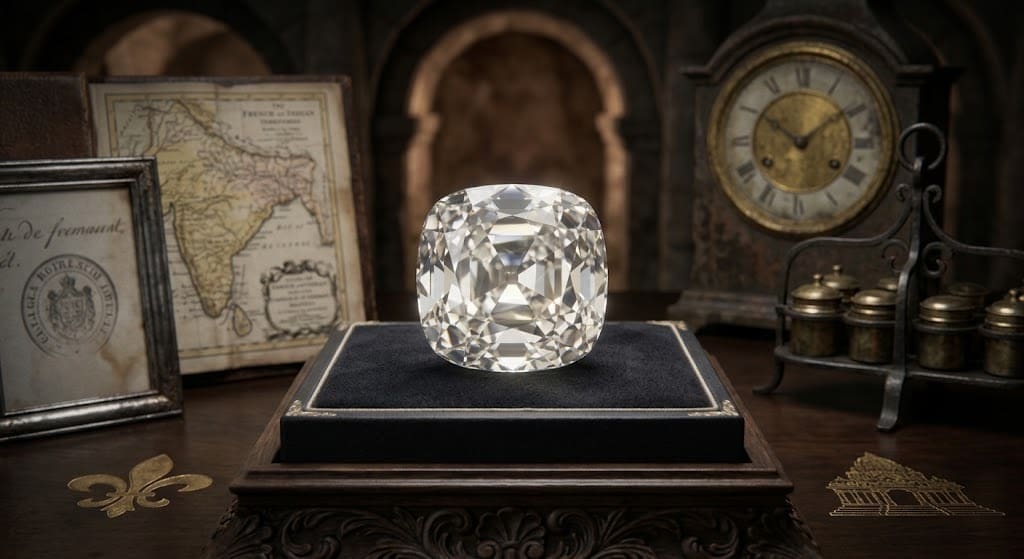
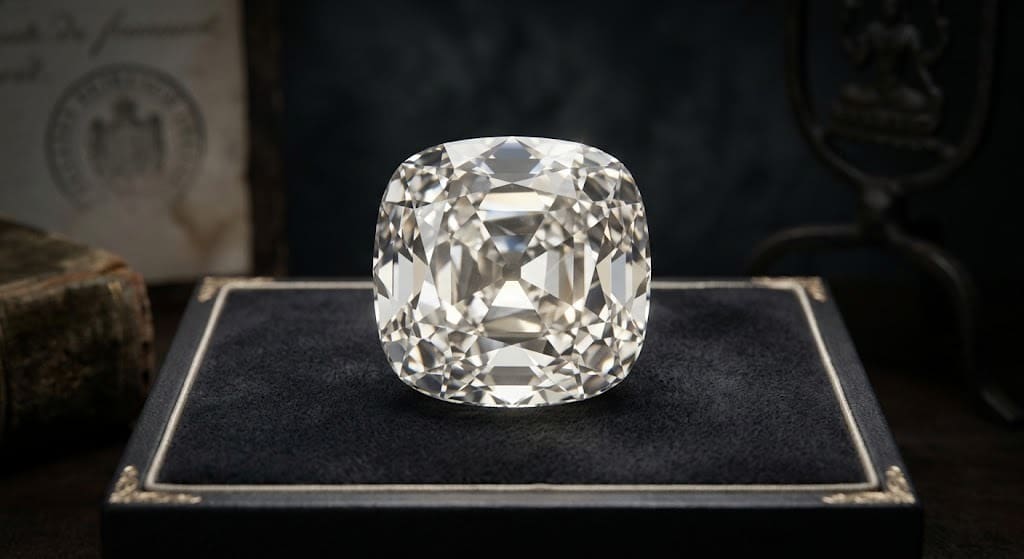
Quick answer: The Regent Diamond is a 140.64-carat cushion-cut white diamond with a faint blue tint, considered one of the purest ever found. Mined in India around 1701 and cut in London, it passed through British colonial hands, the French monarchy, the Revolution, and Napoleon’s coronation sword before landing in the Louvre, where it remains today, valued near $60 million. No diamond has been more entangled with political power, revolution, and empire.
So here is the extraordinary political history of the Regent, from an Atlanta master jeweler’s perspective on why it stands apart.
A Note on Where This Analysis Comes From
This guide comes from Regal Studio in Buckhead, Atlanta. Our founder, Mack, began at the jeweler’s bench at just fourteen, trained across Europe, and is today a GIA Certified Diamond Grader with over 45 years of experience.
We have spent a career studying the great historic stones. Few carry the political weight of the Regent.
So this is not a recycled encyclopedia entry. It is an expert’s look at why this gem became a symbol of power itself.
The Regent Diamond at a Glance
Let us begin with the facts, since even those hint at its stature.
Feature | Detail |
Weight | 140.64 carats (cut) |
Rough weight | ~410 carats |
Color | White with a faint blue tint |
Cut | Cushion brilliant |
Origin | Kollur Mine, Golconda, India (c. 1701) |
Current home | Galerie d’Apollon, Louvre, Paris |
Estimated value | ~$60 million |
A key insight often overlooked: the Regent is widely regarded as one of the purest and most flawless large diamonds ever cut. Its clarity and near-perfect water are what gave it such value that kings and emperors fought to possess it.
A Dark Beginning in the Indian Mines
The Regent’s story opens, like many great diamonds, in violence. Its origin is steeped in legend and blood.
According to accounts, the 410-carat rough was discovered around 1701 by an enslaved worker at the Kollur Mine in India. He reportedly smuggled it out concealed in a wound or hidden on his body.
The legend then turns tragic. An English sea captain is said to have murdered the worker, stolen the stone, and sold it to a merchant.
A key insight often overlooked: this brutal origin story set the tone for everything that followed. The Regent’s history is one of greed and power from its very first chapter.
Thomas Pitt and the Scandal of Ownership
The diamond’s first famous owner gave it its early name, and its first political controversy.
In 1701, Thomas Pitt, the British governor of Madras, bought the stone from a merchant named Jamchand for roughly 48,000 pagodas. For a time it was known as the Pitt Diamond.
To get it safely to England, Pitt hid it in the heel of his son Robert’s shoe aboard an East India Company ship.
Experience has shown that great wealth breeds suspicion. Rumors spread that Pitt had stolen the diamond, so damaging that he published a public letter in the London press defending himself. He never fully cleared his name, and his son continued the effort after his death.
The French Crown Claims It
Here the Regent enters the halls of royal power, and gains its lasting name.
In 1717, Pitt sold the diamond to Philippe II, Duke of Orléans, then Regent of France, for a fortune. From that sale, the stone became the Regent Diamond.
It was set into the crown for the coronation of Louis XV in 1722. Later it adorned the crown of Louis XVI.
A key insight often overlooked: by placing the Regent in the coronation crown, the French monarchy made it a literal symbol of royal authority. To wear the Regent was to wear the power of France.
Revolution: The Diamond That Vanished
Then came the event that makes the Regent truly politically charged. It became a casualty of revolution.
In 1792, during the French Revolution, the royal treasury (the Garde-Meuble) was robbed of the crown jewels. The Regent vanished, along with the Sancy and the French Blue (later recut into the Hope Diamond).
For over a year, the Regent was lost. It was eventually found hidden in a hole in the timberwork of a Paris garret.
In our market observations, this moment is why the Regent matters politically. It survived the fall of a monarchy, was pledged to finance a new government, and passed from the hands of kings to the hands of a republic.
Napoleon’s Sword: A Symbol of Empire
The Regent’s next chapter cemented its status as a gem of raw power.
After the Revolution, the diamond was pledged to raise funds, then reclaimed. Napoleon Bonaparte had the Regent set into the pommel of his ceremonial sword, which he carried at his coronation as Emperor.
A key insight often overlooked: this was a deliberate political statement. Napoleon, who crowned himself, used the Regent, once the jewel of the very monarchy he replaced, to project the legitimacy and grandeur of his new empire.
After Napoleon’s exile, his wife Marie-Louise reportedly took the stone toward Austria, but was made to return it to France.
From Empire to Museum
The Regent’s journey through power finally led to permanence.
It returned to the crown for later French rulers, including Charles X, and was worn by Empress Eugénie under Napoleon III. When France sold most of its crown jewels in 1887, the Regent was deemed too historically significant to part with.
Instead of the auction block, it went to the Louvre, where it has been displayed ever since, in the Galerie d’Apollon among the surviving French Crown Jewels.
Still Standing: The 2025 Louvre Heist
Here is a strikingly current chapter that underscores the Regent’s charmed survival.
In October 2025, thieves disguised as workers carried out a brazen heist at the Louvre’s Galerie d’Apollon, the very gallery that houses the Regent. They escaped with eight pieces of French crown jewels.
A key insight often overlooked: the Regent Diamond was not among the stolen items. Like the Dresden Green before it, this most politically charged of gems once again survived a moment that claimed treasures around it.
Why the Regent Stands Apart
Put its history together and no other diamond compares for political significance.
- Colonial power. Acquired through British imperial trade in India.
- Royal authority. Set in the coronation crowns of French kings.
- Revolution. Stolen and recovered amid the fall of the monarchy.
- Empire. Carried in Napoleon’s coronation sword.
- Republic and museum. Preserved by France as a national treasure.
Experience has shown that some diamonds are prized for beauty, others for rarity. The Regent is prized for something more: it is a witness to three centuries of political power changing hands.
Frequently Asked Questions
How big is the Regent Diamond?
It weighs 140.64 carats in its cut cushion-brilliant form, reduced from a rough stone of roughly 410 carats. It is considered one of the purest and most flawless large diamonds ever cut.Why is the Regent Diamond so historically important?
Because it passed through nearly every major power struggle of its era, British colonial India, the French monarchy, the Revolution, and Napoleon’s empire. It was set in royal coronation crowns and in Napoleon’s ceremonial sword, making it a literal symbol of political power.Where is the Regent Diamond now?
It is on display in the Galerie d’Apollon at the Louvre in Paris, among the surviving French Crown Jewels, where it has been since 1887. It is valued at roughly $60 million.Was the Regent Diamond stolen in the 2025 Louvre heist?
No. Although thieves struck the same Galerie d’Apollon in October 2025 and took eight pieces of crown jewels, the Regent Diamond was not among the stolen items.Why was the Regent originally called the Pitt Diamond?
Because its first famous owner was Thomas Pitt, the British governor of Madras, who bought the rough stone around 1701. It was renamed the Regent after he sold it to Philippe II, Duke of Orléans, the Regent of France, in 1717.
Discover Rare and Historic Diamonds in Atlanta
Legendary stones like the Regent remind us that a great diamond can be far more than beautiful, it can be a witness to history itself. Understanding what makes a stone exceptional is what separates a fine diamond from an ordinary one.
At Regal Studio in Buckhead, every piece is designed and handcrafted by Mack, a GIA Certified Diamond Grader with over 45 years of experience and the trust of more than 278 five-star clients. Whether you are drawn to historic cuts, rare purity, or a flawless classic, we help you understand and source the finest stones with complete transparency.
Our motto says it all: “You Dream It, We Make It.”
Visit Regal Studio on Peachtree Road in Buckhead, or get in touch to book a consultation. Let a seasoned master jeweler help you find a diamond worthy of its own story.
Read More:
Moussaieff Red Diamond: The World’s Largest Fancy Red Diamond Explained
The Regent Diamond: Untold Secrets of France’s $80 Million Crown Jewel