

Choosing a Center Stone for Your Custom Engagement Ring
Quick answer: Choosing the center stone for a custom engagement ring comes down to five decisions: stone type (natural diamond, lab-grown, or gemstone), shape, and the 4Cs of cut, color, and clarity. Prioritize cut above everything, since it drives more than half of a stone’s sparkle. Aim for G-H color and VS2 clarity as the value sweet spot, and consider a “magic weight” just under a round carat number to maximize size for your budget. The center stone sets the tone for your entire ring.
So here is how to choose the perfect center stone, from an Atlanta master jeweler who selects them every day.
A Note on Where This Guidance Comes From
This guide comes from Regal Studio in Buckhead, Atlanta. Our founder, Mack, began at the jeweler’s bench at just fourteen, trained across Europe, and is today a GIA Certified Diamond Grader with over 45 years of experience.
For twenty years on Peachtree Road, we have hand-selected center stones for custom engagement rings, judging each one in person, not just on paper.
So this is not a generic 4Cs recap. It is how a master jeweler actually chooses a stone.
Why the Center Stone Decision Comes First
Before any setting or metal, the center stone is where every custom ring begins. It is the heart of the design.
Everything else, the setting style, the accent stones, the band, is built to frame and protect it. Choose the stone well, and the rest of the design falls into place.
A key insight often overlooked: the center stone also sets your budget. It is typically 50% to 70% of a custom ring’s total cost, so this single choice shapes the whole project.
Step One: Choose Your Stone Type
First, decide what kind of stone will anchor your ring. You have three main paths.
- Natural diamond. Timeless, traditional, with the strongest long-term value retention.
- Lab-grown diamond. Identical to natural in every way, at a fraction of the price, letting you go larger.
- Colored gemstone. A sapphire, emerald, ruby, or other gem for a bold, personal statement.
A key insight often overlooked: the stone type is mostly a budget and values decision, not a beauty one. A well-cut lab-grown or natural diamond of the same specs looks identical. We can walk you through how each affects your overall budget during a consultation.
Step Two: Prioritize Cut Above All
If you remember one thing, make it this. Cut is the single most important factor in a stone’s beauty.
Cut determines how a diamond handles light, its brilliance, its fire, its sparkle. It accounts for more than half of a stone’s visible beauty.
Experience has shown that a smaller, excellently cut stone outshines a larger, poorly cut one every single time. A dull cut cannot be fixed by size, color, or clarity.
A key insight often overlooked: always choose an Excellent or Ideal cut grade before maximizing anything else. This is where your budget works hardest.

Step Three: Understand the 4Cs (and Where to Spend)
The 4Cs, cut, color, clarity, and carat, define a diamond’s quality. But they are not equally worth your money.
Here is where an expert directs your budget.
The 4Cs: Where to Spend for a Custom Ring
Factor | What It Measures | Budget Priority |
Cut | Light performance and sparkle | Spend the most here |
Color | Presence of yellow or brown tint | G-H is the value sweet spot |
Clarity | Internal inclusions | VS2 offers best value |
Carat | Size of the stone | Balance with cut, use magic weights |
A key insight often overlooked: for color, G-H faces up white in most settings for far less than a colorless D-F stone. For clarity, VS2 is typically “eye-clean,” meaning no inclusions are visible without magnification. Paying for higher grades that you cannot see with the naked eye is wasted budget.
Step Four: Select the Shape
Shape is where personality enters, and it dramatically affects both look and price.
Here is how the most popular 2026 shapes compare.
Popular Center Stone Shapes
Shape | Sparkle | Notes |
Round brilliant | Highest | Maximum fire, timeless, commands a premium |
Oval | Very high | Elongates the finger, looks larger, fastest-growing in 2026 |
Cushion | High | Soft, romantic, pillowy sparkle |
Emerald | Step-cut flash | Elegant, but shows inclusions, prioritize VS1-VS2 |
Pear | Very high | Unique teardrop, dramatic |
Princess | Very high | Modern, geometric, good value vs round |
A key insight often overlooked: some shapes have quirks. Ovals can show a “bow-tie” shadow, and emerald cuts reveal inclusions through their open table. Always view these shapes in person before committing.
Step Five: Decide on Carat Weight (Smartly)
Bigger is not automatically better. The smart move is maximizing visual size, not just carat number.
A few expert strategies stretch your budget:
- Use “magic weights.” A 0.90ct or 1.90ct stone looks nearly identical to a full 1.00 or 2.00ct, but costs noticeably less, since prices jump at round numbers.
- Think in diameter, not just carats. A well-cut stone can look larger than its weight suggests.
- Let the setting help. A halo or pavé band makes a center stone read larger than it is.
In our market observations, the 1.00 to 1.50ct range is the traditional sweet spot for center stones, though lab-grown has made 2 to 3ct centers far more accessible.
Step Six: Match the Stone to the Hand and Lifestyle
A center stone does not exist in isolation. It should suit the wearer.
Consider a few practical factors:
- Finger proportion. Elongated shapes like oval and pear flatter and lengthen the finger.
- Lifestyle. For active hands, a lower-profile setting and a durable shape (round, cushion) resist impact better.
- Personal style. Classic, modern, vintage, the shape should reflect the person who wears it every day.
Experience has shown that the “perfect” stone is the one that fits the wearer’s hand, taste, and life, not just the one with the best numbers on a report.
The Master Jeweler’s Advantage
Here is why choosing a center stone with an expert matters, beyond the checklist.
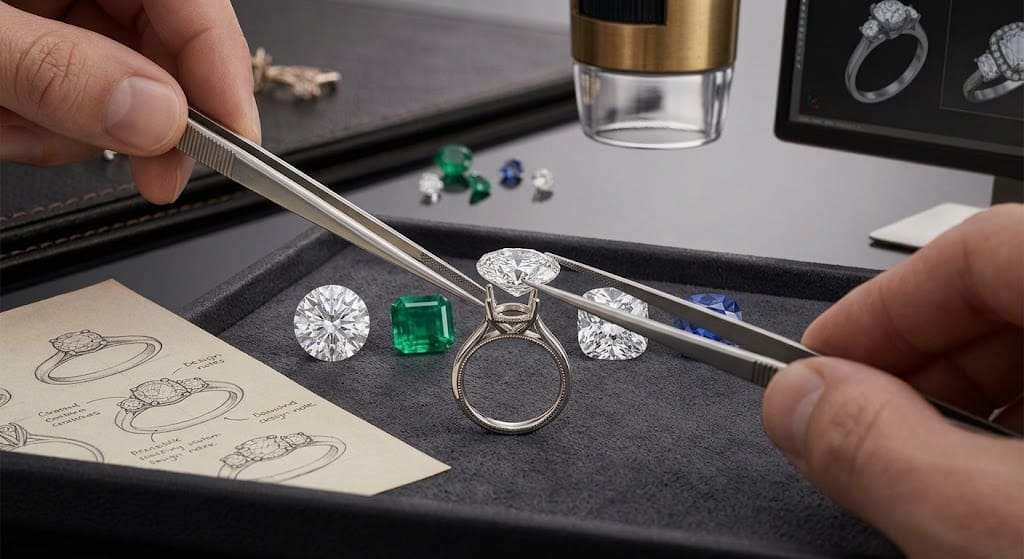
Two diamonds with identical certificates can look noticeably different in person. Grading reports capture a lot, but not everything, subtle differences in how a stone actually performs in light.
A key insight often overlooked: as a GIA Certified Diamond Grader, Mack selects stones by eye, not just by paper. That is the difference between a stone that grades well and one that is genuinely beautiful.
Frequently Asked Questions
What is the most important factor when choosing a center stone?
Cut, without question. It drives more than half of a diamond’s sparkle and cannot be compensated for by size, color, or clarity. Always prioritize an Excellent or Ideal cut before maximizing other factors.What color and clarity should I choose for a center stone?
G-H color and VS2 clarity are the value sweet spots. G-H faces up white in most settings for far less than colorless grades, and VS2 is typically eye-clean, with no inclusions visible to the naked eye. Paying for higher grades you cannot see is wasted budget.What is the best shape for a center stone?
There is no single best shape, it depends on taste. Round brilliant offers maximum sparkle; oval elongates the finger and is the fastest-growing 2026 choice; emerald and cushion offer elegant, distinctive looks. View shapes in person, as some show bow-tie shadows or inclusions.How big should my center stone be?
Most center stones fall between 1.00 and 1.50 carats, though it depends on your budget, hand size, and setting. Use “magic weights” like 0.90ct just under round numbers to maximize size for less, and let a halo setting make the stone look larger.Should I choose a diamond or a colored gemstone?
Either can be stunning. Diamonds offer classic brilliance and durability; sapphires, emeralds, and other gems offer bold color and personal meaning, often at lower cost. Consider durability for daily wear, sapphire is very hard, while softer gems need more care.
Choose Your Perfect Center Stone in Atlanta
The right center stone balances cut, color, clarity, size, and shape, and the best way to find it is to see stones in person, with an expert who selects by eye, not just by certificate.
At Regal Studio in Buckhead, every center stone is hand-selected by Mack, a GIA Certified Diamond Grader with over 45 years of experience and the trust of more than 400 five-star clients. We show you stones side by side, explain every trade-off with complete transparency, and design your custom ring around the one you love.
Our motto says it all: “You Dream It, We Make It.”
Visit Regal Studio on Peachtree Road in Buckhead, or get in touch to book your consultation. Let a seasoned master jeweler help you find the perfect center stone for your custom ring.
Read More:
Custom Fine Jewelry in Atlanta: What Sets It Apart From Mass-Produced Pieces
Lab Grown Diamond Price Drop 2026: How Much Have Prices Actually Fallen?