
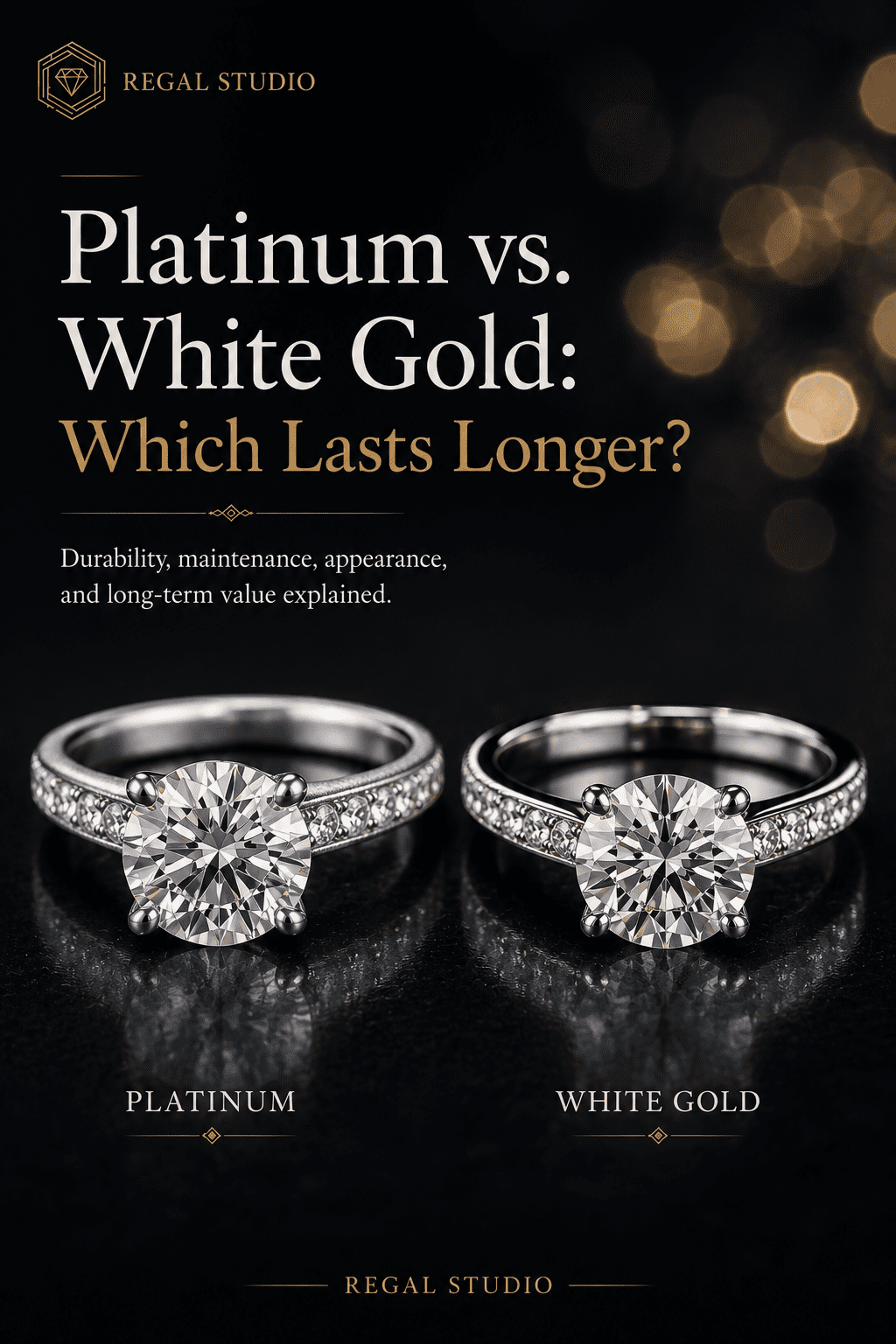


Weighing platinum vs white gold for an engagement ring is really a choice between two ways of owning a ring. On the first day, both look bright and white. The difference shows up over years: how the metal wears, how firmly it holds a diamond, and how much upkeep it asks of you.
This guide covers the four precious metals you are most likely to be offered: platinum, white gold, yellow gold and rose gold. It explains how each one looks, feels, ages and is priced, with engagement rings and fine jewelry in mind. If you are shopping for a groom, our guide to men’s wedding band metals, widths and styles covers that ground in more detail.
What Is Each Metal Actually Made Of?
Pure gold is 24 karat, and it is too soft to survive daily wear in a ring. Jewelers alloy it with other metals for strength and color. The karat number tells you how much of the alloy is gold: 18k is 75% gold and 14k is 58.3% gold. The remainder decides the color.
Yellow, white and rose gold
Yellow gold is usually mixed with silver and copper, which keeps its natural warmth. Rose gold leans on copper, and the more copper in the mix, the deeper the pink. White gold blends gold with whitening metals such as palladium or nickel. Those metals mute the yellow but rarely erase it, so most white gold is finished with a thin layer of rhodium, a bright white metal from the platinum family.
Platinum
Platinum jewelry alloys are typically 90 to 95% platinum, often stamped PT950 or PT900. The metal is white all the way through, so there is no plating to wear off. It is also much denser than gold, and that density shapes both how it feels on the hand and what it costs.
Platinum vs White Gold, Yellow Gold and Rose Gold Compared
The table below summarizes the trade-offs. Every alloy behaves a little differently, so treat it as a general guide rather than a rule for every ring.
| Attribute | Platinum | 14k White Gold | 18k White Gold | Yellow Gold | Rose Gold |
|---|---|---|---|---|---|
| Precious metal content | Typically 90 to 95% platinum | 58.3% gold | 75% gold | 58.3% (14k) or 75% (18k) gold | 58.3% (14k) or 75% (18k) gold |
| Natural color | Cool gray white | Pale, slightly warm under plating | Pale, can read warmer under plating | Warm yellow, richer in 18k | Soft pink, deeper with more copper |
| Plating needed | No | Usually rhodium plated | Usually rhodium plated | No | No |
| How it wears | Metal displaces, develops a satin patina | Fairly hard, loses metal slowly with wear | Softer than 14k, loses metal a bit faster | Scratches and loses metal over decades | Fairly hard, loses metal over decades |
| Weight on the hand | Heaviest | Lightest | Moderate | Light to moderate | Light to moderate |
| Sensitive skin | Usually well tolerated | Depends on alloy; some contain nickel | Depends on alloy; some contain nickel | Usually well tolerated | Usually fine; copper bothers a few people |
| Relative cost | Highest | Lowest | Middle | Similar to white gold of the same karat | Similar to white gold of the same karat |
| Routine upkeep | Occasional polish | Replating every year or two with daily wear | Replating every year or two with daily wear | Occasional polish | Occasional polish |

How Does Each Metal Look Next to a Diamond?
Metal color reflects into a diamond, especially through the prongs and the setting beneath the stone. White metals let a diamond show its own color, which is why buyers choosing platinum or white gold often favor near-colorless grades. Yellow gold casts a gentle warmth, so a diamond a few color grades lower can look perfectly at home in it.
Rose gold flatters warm skin tones and vintage-inspired designs, and it softens the contrast with the stone. A popular middle path is a yellow or rose gold band with a white metal head, so the diamond sits in white prongs while the band keeps its warmth. If you are still deciding on the stone itself, our guide to choosing a center stone explains how color and cut interact with the setting.
New, platinum and rhodium-plated white gold look nearly identical. Platinum is a slightly grayer, softer white; rhodium is brighter until it wears.
Which Metal Is More Durable?
Durability means two things in jewelry: resisting scratches and holding onto metal over decades. This is where platinum vs white gold differs most, and it is the most misunderstood part of the comparison.
Platinum displaces, gold wears away
When platinum is scratched, the metal is mostly pushed aside rather than removed. Over time the surface develops a soft satin patina that some people love and others have polished back to a high shine. Because so little metal is lost, a platinum ring tends to keep its mass and shape for a very long time.
Gold, especially 14k, generally resists scratches better, but when it wears, the metal is gone. Each polishing removes a little, and over decades a shank and prongs can thin.
What it means for prong security
Prongs carry the real risk in an engagement ring, because a worn prong is how a diamond is lost. Platinum prongs tend to bend rather than snap and wear slowly, which is why platinum has long been favored for holding a center stone. Gold prongs can be just as secure when they are well made, but they need closer watching as they thin.
No metal is maintenance free. Any ring worn daily should be checked once or twice a year, and worn prongs can be rebuilt. Our guide to prong retipping explains the warning signs to look for.
How Often Does White Gold Need Rhodium Replating?
Rhodium is hard, but it is a thin surface layer. On a ring worn every day, the palm side usually shows wear first, and the warmer tone of the gold underneath starts to come through. Many owners replate every year or two, though it varies with the alloy, the thickness of the plating and how hard the ring is worn.
Replating is a routine bench service: the ring is cleaned, polished and replated. It is simple, but it is a recurring cost. Platinum, yellow gold and rose gold need no plating at all.
Is Platinum or White Gold Better for Sensitive Skin?
Nickel is a common cause of skin reactions to jewelry, and some white gold alloys contain it. Palladium white gold avoids nickel and is a sound option if you have reacted to costume jewelry before. Rhodium plating can mask the alloy for a while, but once it wears, your skin meets the metal underneath.
Platinum’s high purity makes it a reliable choice for sensitive skin. Yellow gold is usually well tolerated. Rose gold rarely causes trouble, though a small number of people react to copper.
How Do Weight and Feel Compare?
Platinum is much denser than gold, so the same ring made in platinum feels noticeably heavier. Some people find that heft reassuring and describe it as the feel of a substantial ring. Others, especially those used to light jewelry, prefer the easier feel of 14k gold.
Weight matters most in wider bands and larger settings. Trying both on is the fastest way to know which you prefer.
Why Does Platinum Cost More Than Gold?
The per-ounce market prices of platinum and gold move independently, and in some years platinum has traded below gold. Platinum rings still typically cost more, for two reasons. First, density: the same ring needs a greater weight of metal in platinum. Second, purity: a platinum ring is around 90 to 95% precious metal, while 14k gold is just over half.
Platinum is also more demanding to work, with a far higher melting point and specialized tools. Ask any jeweler to quote the same design in more than one metal. Our article on custom engagement ring cost covers the other factors that shape a price.
What About Resizing and Repairs?
Both platinum and gold can be resized and repaired by a capable bench jeweler. Gold is more forgiving to work. Platinum calls for higher heat and specific skills, so not every shop handles it, and it often costs more.
Design choices matter more than metal here. Full eternity bands and rings with stones set all the way around are hard to resize in any metal. Our page on ring resizing in Atlanta explains what can and cannot be adjusted. White gold also needs replating after any resizing or repair, since the work disturbs the finish.
Should Your Engagement Ring and Wedding Band Match?
Rings worn side by side rub against each other every day. When two different metals touch, the softer or less dense one tends to wear faster, so a gold band worn against a platinum ring can slowly lose metal. For that reason, many jewelers recommend matching the metal of your engagement ring and band.
Two-tone looks still work when the touching surfaces are the same metal. Contour matters too, since a band shaped to sit flush keeps both pieces from shifting. Our custom wedding bands are made to fit the ring they will sit beside.
Which Metal Suits Which Lifestyle?
- Platinum: for daily wear over decades, active hands, sensitive skin, and anyone who wants an heirloom that keeps its metal.
- 14k white gold: for the white look at a lower price, with good scratch resistance. Plan on periodic replating, and choose a nickel-free alloy if your skin is sensitive.
- 18k white gold: for more gold content in a slightly softer metal, with the same replating needs as 14k.
- Yellow gold: for warm skin tones, classic or vintage designs, and anyone who wants zero plating.
- Rose gold: for a softer, romantic look. It is fairly hard wearing and needs no plating.
At our Buckhead studio, master jeweler Mack, with more than 45 years at the bench, European training and credentials as a GIA Diamond Grader, walks clients through these trade-offs with real metal samples in hand. Every piece is designed and made to order, previewed in CAD before production, then set and finished by our jewelers. You can read more about our custom design process before you visit.
Frequently Asked Questions
Which lasts longer, platinum or white gold?
Platinum generally keeps its metal longer, because scratches push the metal aside rather than remove it. White gold resists scratches well but loses a little metal with wear and each polishing. Both can last a lifetime with regular checks and care.
Does white gold turn yellow over time?
The gold itself does not change, but as the rhodium plating wears, the warmer alloy underneath shows through. Replating restores the bright white finish.
Can I put a white metal head on a yellow gold ring?
Yes, and it is a common design choice. A platinum or white gold head lets the diamond read whiter while the band keeps its warmth. Your jeweler can advise on how the two metals are joined.
Is 18k gold better than 14k for an engagement ring?
Neither wins in every case. 18k has more gold but is softer, while 14k is harder and more scratch resistant, so active wearers often lean toward 14k.
Is platinum worth the extra cost?
In platinum vs white gold, the trade is upfront cost against long-term upkeep. Platinum asks more at the start but needs no plating and keeps its metal over decades. White gold gives the same white look for less today, with modest upkeep along the way.
If you would like to see and feel these metals side by side, book a free consultation at our Atlanta studio, in person or virtually, or call (404) 846-2525. We will help you choose the metal that suits your hand and how you live.