
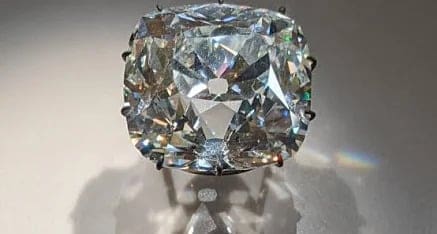


The Regent Diamond: Untold Secrets of France’s $80 Million Crown Jewel
Imagine a diamond so perfect that five French kings wore it, Napoleon Bonaparte insisted on carrying it into battle, and even during the chaos of the French Revolution, thieves couldn’t bear to damage it. That diamond exists, and it’s called the Regent Diamond one of the most flawless and historically significant gemstones ever discovered.
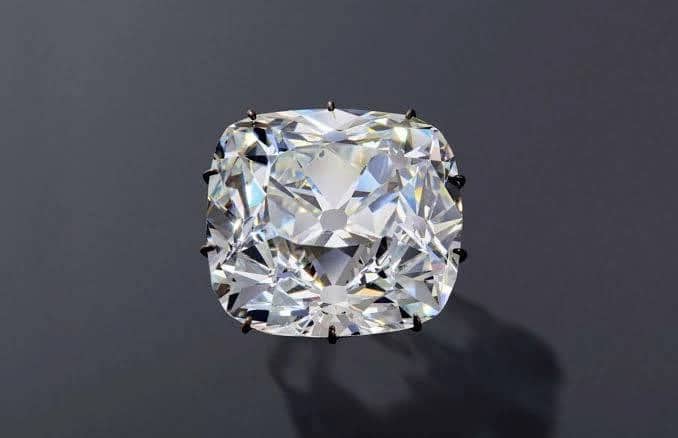
Unlike many famous diamonds shrouded in curse legends and controversy, the Regent has a different kind of mystique. It represents the pinnacle of what nature can create: a 140.64-carat cushion-cut brilliant so clear and perfectly proportioned that gemologists still study it as the ideal example of diamond cutting mastery.
But this stone’s journey from an Indian mine to the French Crown Jewels reads like an adventure novel. It survived murder, theft, revolution, and two world wars. It adorned the crowns of absolute monarchs and the sword of history’s greatest military commander. And today, it sits in the Louvre Museum, one of the few truly great diamonds accessible to anyone who wants to see it.
Whether you’re fascinated by gemstones, captivated by European history, or curious about what makes certain objects priceless, you’re about to discover why the Regent Diamond deserves its place among humanity’s greatest treasures. You’ll learn the complete Regent diamond history from its violent origins to its peaceful present, understand what makes the Regent Diamond size and cut so extraordinary, and finally see why this particular stone earned its legendary reputation.
Let’s journey into the remarkable story of the diamond that survived everything history could throw at it.
Discovery and Early History: A Tale of Murder and Fortune
The Regent Diamond’s story begins in 1698 in the Kollur mine along the Krishna River in Golconda, India, the same legendary diamond-producing region that yielded the Hope Diamond and the Koh-i-Noor.
The Slave and the Smuggling Attempt
According to historical accounts, an enslaved mine worker discovered the enormous rough diamond weighing approximately 410 carats embedded in the mine wall. Recognizing its extraordinary value, he made a desperate plan to escape with it.
The slave allegedly cut open his leg, hid the diamond in the wound, and bandaged it. He then approached an English sea captain named Samuel Huncks, offering to share the diamond’s value in exchange for passage out of India.
The tragic betrayal: Captain Huncks agreed to the plan, took the diamond, murdered the slave by throwing him overboard, and kept the entire stone for himself. This brutal origin story, while potentially embellished over centuries, reflects the violent realities of the colonial-era diamond trade.
The Sale to Thomas Pitt
In 1702, Captain Huncks sold the diamond to Thomas Pitt, the British Governor of Madras (now Chennai). Pitt paid approximately £20,400—an enormous sum equivalent to millions today.
Thomas Pitt became obsessed with his acquisition. He allegedly:
- Slept with it under his pillow
- Constantly worried about theft
- Feared assassination attempts
- Eventually grew paranoid about owning such a valuable object
Pitt decided to have the diamond cut in London to both enhance its value and make it easier to sell. The cutting took two years (1704-1706) and cost £5,000—a quarter of what he’d paid for the rough stone.
Cutting results:
- Main stone: 140.64 carats (cushion-cut brilliant)
- Secondary stones: Several smaller diamonds from the rough
- Weight loss: Approximately 65% (typical for maximizing brilliance)
The result was spectacular. The cut diamond displayed exceptional clarity, perfect proportions, and brilliant fire. It was immediately recognized as one of the finest diamonds ever seen in Europe.
Regent Diamond History: From British Merchant to French Royalty
The Regent diamond history took a dramatic turn when Thomas Pitt began seeking a buyer worthy of this extraordinary gem.
The Sale to Philippe II, Duke of Orléans
After years of searching for a buyer who could afford such a treasure, Pitt found his customer in 1717: Philippe II, Duke of Orléans, who served as Regent of France during young King Louis XV’s minority (hence the diamond’s name).
Sale details:
- Price: £135,000 (approximately $20-25 million in today’s currency)
- Buyer: Philippe II, Duke of Orléans, Regent of France
- Purpose: To add to the French Crown Jewels
- Result: The diamond was renamed the “Regent” in honor of its buyer
Philippe’s purchase made headlines across Europe. Critics questioned spending such an enormous sum during difficult economic times, but supporters argued the Regent Diamond would enhance France’s prestige for generations.
They were right. The diamond would remain France’s most treasured gem for over three centuries.
The Diamond Under French Kings
The Regent Diamond became the centerpiece of French royal regalia, worn or displayed by successive monarchs:
King Louis XV (1715-1774):
- Wore it in his crown during his coronation in 1722
- Had it set in various pieces of royal jewelry
- Occasionally wore it on his hat for special occasions
King Louis XVI (1774-1792):
- Featured prominently in his crown
- Displayed during major state ceremonies
- Last king to wear it before the Revolution
The Royal Treasury: Between royal uses, the diamond resided in the Garde-Meuble (Royal Treasury) along with other crown jewels, where it symbolized the wealth and power of the French monarchy.
The French Revolution and Daring Theft (1792)
In September 1792, amid revolutionary chaos, thieves broke into the Royal Treasury and stole the French Crown Jewels. The Regent Diamond disappeared along with the Blue Diamond of the Crown (which would later become the Hope Diamond) and numerous other treasures.
Unlike many stolen jewels that were broken up or damaged, the Regent was recovered within a year. According to accounts, it was found hidden in the timber framework of a Parisian attic suggesting the thief recognized it was too famous to sell and too perfect to destroy.
The diamond’s survival intact through this tumultuous period speaks to its recognized perfection. Even desperate criminals couldn’t bring themselves to damage such a masterpiece.

Napoleon Bonaparte’s Obsession: The Diamond Goes to War
After the Revolution, the Regent Diamond’s story took another dramatic turn when it caught the eye of France’s most famous military leader.
Napoleon’s Sword
Napoleon Bonaparte, crowned Emperor of France in 1804, chose the Regent Diamond for a unique purpose. Rather than wearing it in a crown, he had it set in the hilt of his ceremonial sword.
Why the sword?
- Symbolized military power over royal lineage
- Kept the diamond close during battles and ceremonies
- Made a bold statement about his self-made empire
- Demonstrated that he valued action over tradition
Napoleon carried this sword during major military campaigns, meaning the Regent Diamond witnessed some of history’s most famous battles, including potentially Austerlitz (1805) and Wagram (1809).
After Napoleon: The Restoration
Following Napoleon’s defeat and exile, the Bourbon monarchy was restored. The Regent Diamond was recovered and returned to the Crown Jewels, where it was set in the crowns of subsequent rulers:
King Louis XVIII used it in his coronation crown King Charles X also featured it prominently in his royal regalia Napoleon III later had it set in a Greek-style diadem for his wife, Empress Eugénie
Through all these transitions, the diamond survived intact—a testament to its recognized perfection that transcended political upheavals.
Regent Diamond Size and Physical Perfection
What makes the Regent Diamond size and quality so exceptional? Let’s examine why gemologists consider it one of the most perfect diamonds ever cut.
Technical Specifications
- Weight: 140.64 carats (28.128 grams)
- Cut: Cushion brilliant (antique style with modern proportions)
- Color: D color (absolutely colorless—the highest grade)
- Clarity: Internally flawless or VVS1 (virtually no inclusions)
- Dimensions: Approximately 29.8 × 26.7 × 17.8 mm
- Classification: Type IIa (purest category, less than 2% of all diamonds)
Why Size Matters
At 140.64 carats, the Regent is large enough to be spectacular but not so massive as to be unwieldy. This “Goldilocks” size offers several advantages:
Visibility: Large enough to make a statement in any setting Versatility: Can be set in crowns, jewelry, or swords Proportions: Size allows for ideal cutting proportions Brilliance: Big enough to display exceptional fire and sparkle
Comparison with other famous diamonds:
- Larger than: Koh-i-Noor (105.6 carats), Hope Diamond (45.52 carats)
- Smaller than: Cullinan I (530.2 carats), Cullinan II (317.4 carats)
- Similar size to: Dresden Green (41 carats) is smaller; Orlov Diamond (189.62 carats) is larger
The Perfect Cut
What truly distinguishes the Regent is the quality of its cut. Despite being fashioned in 1704-1706 using primitive tools, the diamond displays near-perfect proportions that gemologists still study today.
Cutting excellence:
- Symmetry: Virtually perfect alignment of all facets
- Proportions: Ideal depth-to-width ratio for maximum brilliance
- Polish: Exceptional surface finish creating mirror-like reflections
- Facet arrangement: 58 facets arranged in optimal pattern
The cutter who fashioned the Regent achieved what many modern diamond cutters strive for: a balance between preserving weight and maximizing optical performance. The result is a diamond that literally seems to glow from within.
Type IIa Classification
The Regent belongs to the rare Type IIa diamond category, representing less than 2% of all natural diamonds. These diamonds:
- Contain virtually no nitrogen impurities
- Display exceptional optical transparency
- Often are colorless or near-colorless
- Typically come from ancient geological formations
Other famous Type IIa diamonds include the Cullinan, Koh-i-Noor, and Lesedi La Rona. This classification indicates the Regent formed under specific geological conditions billions of years ago, making it not just beautiful but scientifically significant.
World Wars and Modern Times: Survival Through Crisis
The Regent Diamond’s 20th-century journey tested its survival through humanity’s darkest hours.
World War I (1914-1918)
As German forces advanced toward Paris, French authorities evacuated the most valuable national treasures. The Regent Diamond was removed from Paris and hidden in secure locations throughout the war.
After the war ended, it returned to public display but the experience highlighted vulnerabilities in how France protected its cultural heritage.
World War II (1939-1945)
When Nazi Germany invaded France in 1940, protecting the Regent became urgent. French officials secretly removed it from the Louvre along with other irreplaceable treasures.
Wartime hiding places: The diamond was reportedly hidden in various châteaux in the Loire Valley and other locations far from Paris. Exact locations remained classified even after the war to protect future security protocols.
Nazi interest: German forces actively sought French treasures, including the crown jewels. Had the Regent been captured, it likely would have been taken to Germany as part of Hitler’s planned Führermuseum or kept by high-ranking Nazi officials.
The diamond survived the war undetected and returned to the Louvre after liberation in 1944.
Permanent Home at the Louvre
In 1887, the French Third Republic decided that the crown jewels should be sold to prevent any future monarch from claiming them. However, the most historically significant pieces including the Regent Diamond were exempted and transferred to the Louvre Museum.
This decision ensured that the Regent would remain in France permanently as national heritage rather than private property.
The Regent Diamond Today: Visiting and Viewing
Unlike many famous diamonds locked in vaults or private collections, the Regent Diamond is accessible to anyone who visits Paris.
Location and Display
Museum: Musée du Louvre (Louvre Museum) Gallery: Galerie d’Apollon (Apollo Gallery) Section: French Crown Jewels collection Display: Climate-controlled case with security glass
The Apollo Gallery is one of the Louvre’s most stunning spaces—a golden gallery with painted ceilings that perfectly complements the Regent’s brilliance.
Visitor Information
Address: Musée du Louvre Rue de Rivoli 75001 Paris, France
Hours:
- Monday, Thursday, Saturday, Sunday: 9:00 AM – 6:00 PM
- Wednesday, Friday: 9:00 AM – 9:45 PM
- Closed Tuesdays
Admission:
- Adults: €22 (check official website for current rates)
- Free: Under 18, EU residents under 26, first Sunday of month (Oct-Mar)
Best viewing times:
- Weekday mornings (9:00-11:00 AM)
- Wednesday/Friday evenings
- Off-season (November-March, excluding holidays)
What You’ll See
The Regent is displayed alongside other extraordinary pieces from the French Crown Jewels:
Other crown jewels in the collection:
- The Côte-de-Bretagne ruby (originally 206 carats)
- The Sancy diamond (55 carats, another legendary stone)
- Various royal crowns and ceremonial pieces
- Marie Antoinette’s jewelry
The display includes historical information, diagrams showing the diamond’s journey through time, and details about its geological formation and cutting.
Photography
Photography is permitted in the Apollo Gallery (without flash), so visitors can capture memories of viewing this legendary diamond. However, the security glass and lighting can make photography challenging—patience and positioning are key for good photos.
Scientific and Gemological Significance
Beyond its historical importance, the Regent Diamond contributes to scientific understanding of diamond formation and cutting techniques.
Geological Formation
The Regent formed approximately 1-3 billion years ago deep within Earth’s mantle:
Formation conditions:
- Depth: 90-120 miles below Earth’s surface
- Temperature: 900-1,300°C
- Pressure: 45-60 kilobars
- Time: Millions of years of crystal growth
The diamond’s Type IIa classification and exceptional purity indicate it formed in unusually favorable conditions with minimal impurities in the carbon source.
Early 18th Century Cutting Excellence
The Regent represents a pivotal moment in diamond cutting history. Cut between 1704-1706, it demonstrates that cutters of that era could achieve results rivaling modern precision:
Historical context:
- Predates modern cutting tools by two centuries
- Created using hand-powered wheels and techniques
- Required exceptional skill and understanding of light behavior
- Set new standards for what was possible in diamond cutting
Modern gemologists study the Regent to understand how early cutters achieved such excellence without computers, precise measuring tools, or electric power.
Value and Insurance
The Regent Diamond’s current value is difficult to assess precisely because:
Market impossibility: As part of France’s national heritage, it cannot be sold Insurance estimates: Range from $60-100 million, though these are conservative Historical significance: Adds incalculable premium beyond just physical properties Cultural value: Belongs to the French people as shared heritage
If it could theoretically be auctioned, experts believe it would likely exceed $100-200 million, potentially reaching significantly higher with competitive bidding.
Comparison with Other Legendary Diamonds
How does the Regent compare to other famous stones?
Regent vs. Hope Diamond
Size: Regent (140.64 carats) is 3× larger than Hope (45.52 carats) Color: Regent is colorless; Hope is famous blue History: Both survived the French Revolution theft Current location: Regent in Louvre; Hope in Smithsonian Accessibility: Both on public display Controversy: Hope has curse legends; Regent has none
Regent vs. Koh-i-Noor
Size: Regent (140.64 carats) is larger than Koh-i-Noor (105.6 carats) Quality: Both Type IIa, exceptional quality History: Koh-i-Noor has far longer documented history (700+ years) Cutting: Regent cut in 1706; Koh-i-Noor recut in 1852 Controversy: Koh-i-Noor highly disputed ownership; Regent peacefully resides in France Accessibility: Both in major museums (Tower of London vs. Louvre)
Regent vs. Cullinan Diamonds
Size: Regent much smaller than Cullinan I (530.2 carats) and II (317.4 carats) Age: Regent cut 200+ years before Cullinan discovery (1905) Quality: All exceptional, but Regent’s proportions considered nearly perfect Historical wear: Regent worn by more monarchs over longer period Current status: Regent in museum; Cullinans still in active royal use
What Makes the Regent Special
Among all famous diamonds, the Regent stands out for:
Balance: Perfect size—large enough to impress, small enough to wear Perfection: Exceptional color, clarity, and cut quality Survival: Made it through Revolution, Napoleon, two World Wars intact Accessibility: Anyone can see it at the Louvre Reputation: Universally admired with no curse legends or major controversies

Frequently Asked Questions About the Regent Diamond
1. What is the Regent Diamond and why is it famous?
The Regent Diamond is a 140.64-carat cushion-cut brilliant diamond, widely considered one of the most perfect diamonds ever discovered. Currently housed in the Louvre Museum in Paris, the Regent Diamond is famous for several reasons: its exceptional quality (D color, internally flawless clarity, and nearly perfect proportions), its remarkable Regent diamond history spanning five French kings and Napoleon Bonaparte, and its survival through the French Revolution, two World Wars, and numerous political upheavals. Discovered in India in 1698, purchased by the Duke of Orléans (Regent of France) in 1717, and worn by French royalty for centuries, it represents the pinnacle of diamond cutting excellence. The Regent is one of few truly legendary diamonds accessible to the public, making it both historically significant and democratically viewable—anyone visiting Paris can see this masterpiece.
2. What is the Regent Diamond size and how does it compare to other famous diamonds?
The Regent Diamond size is 140.64 carats (28.128 grams), measuring approximately 29.8 × 26.7 × 17.8 millimeters. This places it in an ideal “middle range” among famous diamonds—significantly larger than the Hope Diamond (45.52 carats) and Koh-i-Noor (105.6 carats current size), but smaller than the Cullinan I (530.2 carats) and Cullinan II (317.4 carats). The Regent’s size is considered optimal because it’s large enough to display spectacular brilliance and make a powerful visual statement, yet small enough to be versatile in various settings including crowns, jewelry, and even Napoleon’s sword hilt. Gemologists particularly admire how the cutter balanced size retention with optical performance—the diamond was reduced from approximately 410 carats rough to 140.64 carats finished, achieving near-perfect proportions that maximize brilliance despite the 65% weight loss typical of fine diamond cutting.
3. Where is the Regent Diamond now and can I see it?
The Regent Diamond is permanently housed in the Musée du Louvre (Louvre Museum) in Paris, France, specifically in the Galerie d’Apollon (Apollo Gallery) as part of the French Crown Jewels collection. Yes, you can see it—the diamond is on public display in a climate-controlled, security-glass case alongside other treasures from French royal history including the Sancy diamond and Côte-de-Bretagne ruby. The Louvre is open Monday, Thursday, Saturday, and Sunday from 9:00 AM to 6:00 PM, and Wednesday and Friday from 9:00 AM to 9:45 PM (closed Tuesdays). Adult admission is approximately €22, with free entry for those under 18 and EU residents under 26. The best viewing times are weekday mornings (9:00-11:00 AM) or evening hours on Wednesday and Friday to avoid peak crowds. Photography is permitted without flash. The Apollo Gallery itself is one of the Louvre’s most beautiful spaces, making the visit worthwhile beyond just viewing the diamond.
4. What happened to the Regent Diamond during the French Revolution and Napoleon’s era?
The Regent diamond history during the French Revolution is dramatic. In September 1792, thieves broke into the Royal Treasury (Garde-Meuble) and stole the French Crown Jewels, including the Regent Diamond. Unlike many stolen jewels that were destroyed or broken up, the Regent was recovered within a year, reportedly hidden in the timber framework of a Parisian attic suggesting even desperate thieves recognized it was too perfect to damage and too famous to sell. After recovery, the diamond remained in state possession and caught Napoleon Bonaparte’s attention. When crowned Emperor in 1804, Napoleon made a unique choice: rather than wearing the Regent in a crown, he had it set in the hilt of his ceremonial sword. Napoleon carried this sword during major military campaigns, meaning the Regent witnessed some of history’s most famous battles. After Napoleon’s defeat, the Bourbon monarchy was restored and the diamond returned to the Crown Jewels, later being set in various royal crowns before ultimately being transferred to the Louvre in 1887.
5. How much is the Regent Diamond worth today?
The Regent Diamond’s current worth is difficult to assess precisely because it’s part of France’s inalienable national heritage and cannot legally be sold. Conservative insurance estimates range from $60-100 million, though many experts believe these figures undervalue the stone significantly. If it could theoretically be auctioned, the Regent would likely command $100-200 million or more due to several factors: its exceptional size (140.64 carats), perfect quality (D color, internally flawless clarity, Type IIa classification), historical significance (worn by five French kings and Napoleon), documented provenance (clear ownership history since 1698), and cutting excellence (near-perfect proportions despite being fashioned in 1704-1706). For comparison, the Pink Star diamond sold for $71.2 million at 59.60 carats, and the Regent is more than twice that size with arguably superior historical significance. However, its true value transcends money as a cultural treasure accessible to millions at the Louvre, it provides educational, historical, and aesthetic value that cannot be quantified in currency.
Conclusion: The Regent Diamond’s Timeless Legacy
The Regent Diamond stands as a testament to nature’s ability to create perfection and humanity’s skill in revealing it. From its violent discovery in 1698 to its peaceful residence in the Louvre today, this 140.64-carat masterpiece has witnessed some of history’s most dramatic moments while maintaining its flawless beauty.
Understanding the complete Regent diamond history reveals a gemstone that transcends mere monetary value. It survived murder, theft, revolution, military campaigns, and two World Wars yet emerged from each trial unscathed, a symbol of permanence in a world of constant change. Five French kings wore it in their crowns, Napoleon carried it into battle on his sword, and now millions of visitors each year stand before it, marveling at the same perfection that captivated monarchs centuries ago.
The Regent Diamond size and quality represent the ideal balance large enough to inspire awe, cut with such precision that it seems to glow from within, and blessed with clarity so exceptional that even modern gemologists struggle to find flaws. It proves that sometimes, human skill working with nature’s gifts can create something that approaches perfection.
Unlike many legendary diamonds locked away in vaults or surrounded by curse legends and ownership disputes, the Regent offers something rare: accessibility. Anyone who visits Paris can stand before this masterpiece and connect directly with the same beauty that moved kings to place it in their crowns and emperors to carry it into battle.
The Regent Diamond reminds us that true masterpieces transcend their material value. They become part of our shared human heritage, links to our past, inspirations in our present, and treasures we preserve for future generations who will stand where we stand, looking at the same perfect stone and feeling the same sense of wonder.
Planning a trip to Paris? Make sure the Galerie d’Apollon at the Louvre is on your itinerary. Seeing the Regent Diamond in person watching light dance through its facets, observing the perfection achieved over 300 years ago, and connecting with this tangible piece of history is an experience that photographs simply cannot capture. The Regent Diamond awaits, still perfect, still inspiring, still proving that some treasures truly are timeless.
Read More: The Cullinan Diamond: World’s Largest Gem & Its $2 Billion Secret